The Census has asked. The harder count is still to come.
For the first time, Australia has a reliable way to count LGBTIQA+ people. It still has no way to count what they own.
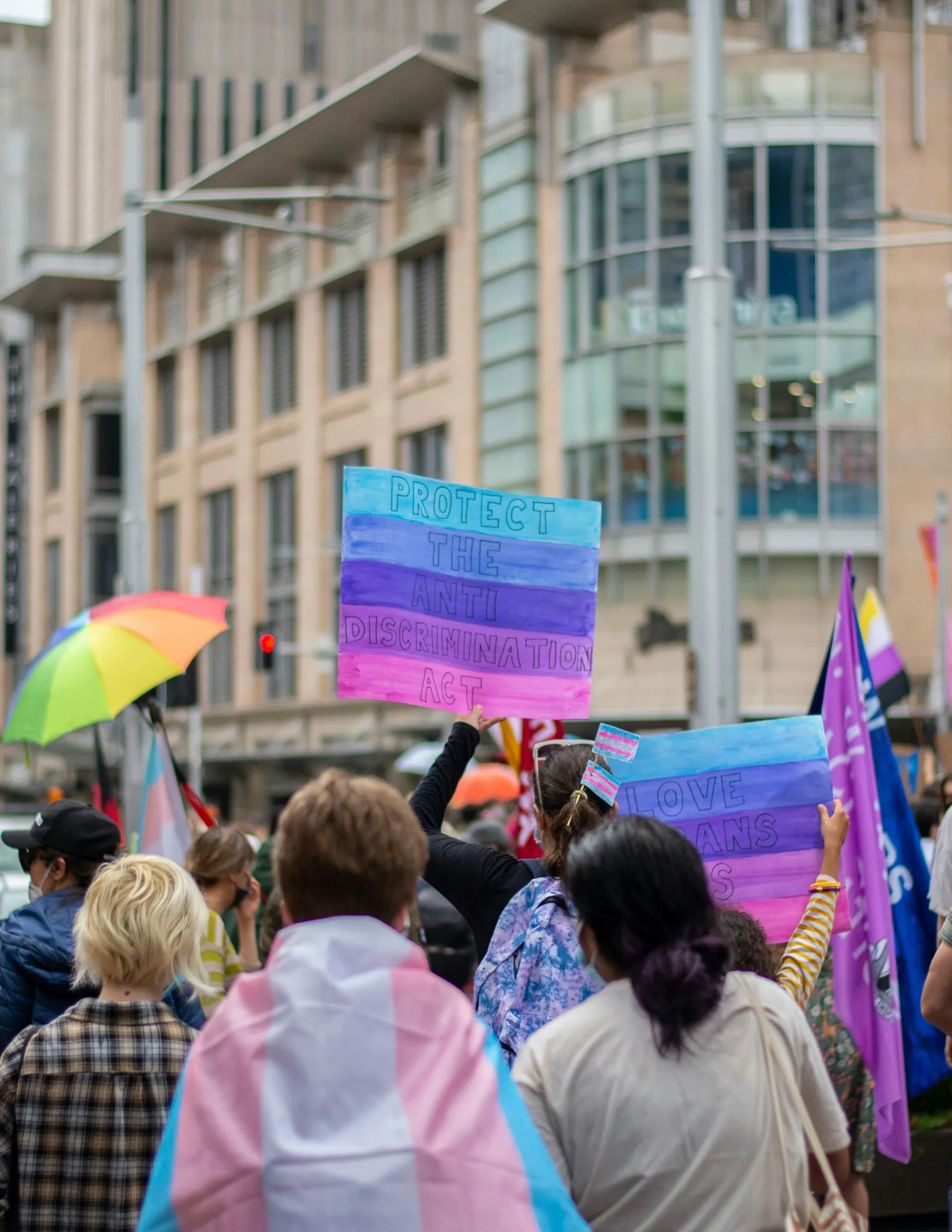
For the first time in its history, the Australian Census has asked people how they describe their sexual orientation and what their gender is. The questions went to everyone aged sixteen and over on the night of 11 August 2026, and both were voluntary. It was not an easy arrival. The topics were recommended by the Bureau of Statistics, dropped by the government, and reinstated after a public argument that lasted less than a week. The first results are due in June 2027, with employment and income releases in October and further detail through 2028.
What this changes is more than the headline suggests and less than the sector might hope.
Until now, the best national figure came from the Bureau pooling four of its household surveys, a combined sample of about 45,000 people, to produce an experimental estimate that 4.5 per cent of Australians aged sixteen and over are LGBTI+, or roughly 910,600 people. The Bureau was careful to say these were not population benchmarks and should be used with caution, and the LGBTI+ scope of that estimate includes people with variations of sex characteristics, which the 2026 Census does not separately ask about. That caution was widely ignored by everyone who wanted a number to quote, which is understandable, because for two decades there had been nothing better. From the middle of next year there will be a benchmark rather than an estimate, and that shifts the ground under every claim made about this community’s size, distribution and circumstances.
It also does more for economic questions than is generally assumed. The Census has always asked people about their main job, and it distinguishes those who work in their own business from those who work for someone else. With the new identity questions sitting alongside that one, it will be possible, subject to what the Bureau releases and suppresses, to describe the LGBTIQA+ people who run businesses in Australia: how many there are, where they live, what industries they work in and what they earn. That is a real gain and it should not be talked down.
What the Census cannot do is count businesses. A person who works in their own business is not the same thing as an enterprise on the Australian Business Register. One person can hold interests in several companies; one company can have several owners; and the Census asks nothing about who holds a controlling share of anything. So the data arriving in 2027 will describe LGBTIQA+ owner managers as people, in some detail, while remaining silent on the question procurement systems actually ask, which is whether a given supplier is majority owned and controlled by LGBTIQA+ people. Those are different units of measurement, and the gap between them is precisely where the supplier diversity conversation gets stuck.
This matters because the country is about to acquire a reliable population count and no reliable enterprise count, and the first tends to get mistaken for the second. Once there is an authoritative figure for LGBTIQA+ Australians, someone will apply a business ownership rate to it and announce how many LGBTIQA+ businesses exist. That would be a modelled number wearing the costume of a counted one, and it would be pulled apart the first time a procurement officer asked where it came from.
The more useful response is to treat the coming months as a design window rather than a waiting period. Which Census variables can be usefully cross tabulated once the data lands, and which will be suppressed to protect small groups? What would an enterprise level survey need to ask that the Census does not, and who would fund it? How does a person level count of owner managers translate, if at all, into anything a buyer could use?
The Census has done the part that only the Census could do. The second count, the one that describes what LGBTIQA+ Australians own rather than who they are, will exist only if someone decides to build it. That decision has not yet been made by anyone, and the data arriving in June makes it harder to keep avoiding.
Sources
- Australian Bureau of Statistics. Clarification on new Census questions, 28 July 2026.
- Australian Bureau of Statistics. 2026 Census topics and data release plan: status in employment and business questions.
- Australian Bureau of Statistics. 2021 Census dictionary: status in employment.
- Australian Bureau of Statistics. Estimates and characteristics of LGBTI+ populations in Australia, 2022.
- Australian Bureau of Statistics. Outcomes of the 2026 Census topic review.
- Australian Bureau of Statistics. 2026 Census product guide: staged release dates.
Source pages last checked 19 September 2026.
Pride in Business publishes analysis on LGBTIQA+ economic participation in Australia. It is funded and published through Just Gold’s impact program.
Get The Briefing. Our latest analysis and research updates, in one monthly email.